

NABE CHICAGO Past Events

NABE CHICAGO Event
EVERYTHING IS NOW CONNECTED: OPTIONS/COSTS/RISKS
Economic Impacts to Industries, Supply Chains, Infrastructure, Allies
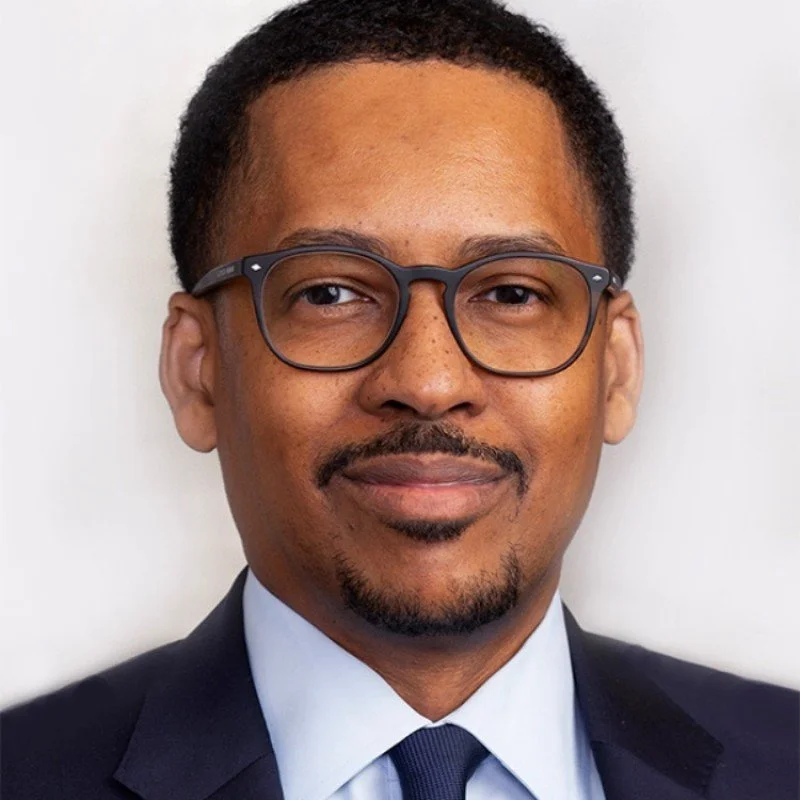
Speaker: Loyaan Egal

Moderator: Lyric Hughes Hale
An afternoon Sherry Hour with light snacks accompany a discussion by Loyaan Egal, a Partner with Morgan, Lewis & Bockius and former Special Advisor to the Chair of the US Federal Communications Commission who was responsible for overseeing US Privacy, Cyber Security, and Supply Chain Issues under Presidents Trump and Biden. Moderator Lyric Hughes Hale, a Geoeconomics Expert, will guide the discourse under Chatham House rule.
Most economists probably don’t think of the Federal Communications Commission when they think about national security, industrial policy, or global supply chains. However, in a world in which almost everything is becoming connected, the FCC’s traditional authority over communications equipment has taken on a much broader economic and strategic significance.
Congress has given the Commission an explicit national-security role through the FCC Covered List, while the digitalization of the physical economy has brought an expanding range of products—from routers and drones to advanced robotics and power inverters—within the orbit of FCC equipment-authorization rules.
The implications extend well beyond telecommunications. Recent actions increasingly look not simply at who made a product, but where it was made, what components are inside it, who controls the technology, and whether its supply chain can be trusted. Some restrictions can apply to foreign production even when the manufacturer itself is American. For economists and business leaders, this raises a new set of questions:
What is the economic cost of security? If companies must conduct deeper due diligence, document component origins, maintain alternative suppliers, and shift production toward trusted locations, how much of that cost ultimately reaches consumers?
How far down the supply chain must companies look?
Is the burden of proof shifting to companies? Conditional approvals can require detailed disclosure of ownership, manufacturing locations, bills of materials, component countries of origin, software and IP ownership, and potential supply-chain choke points.
When does national-security regulation become industrial policy?
What does this mean for globalization and allied supply chains?
Where does the FCC’s reach end when nearly every machine is connected? As communications capability becomes embedded in factories, vehicles, energy systems, etc., the traditional distinction between telecommunications and the broader industrial economy is increasingly difficult to maintain.
October 29, 2026, 3:30pm – 5:30pm CT
Location: Union League Club Chicago’s Parlor Room
65 W Jackson Boulevard, Chicago, IL
DOES MONEY STILL MATTER?
Tim Congdon on Inflation, M2 and the Fed
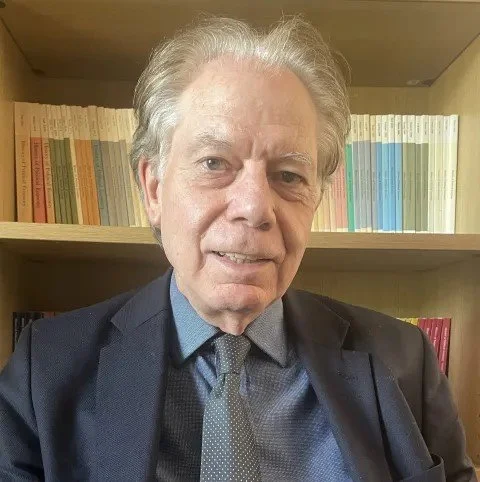
Speaker: Tim Congdon, CBE
October 9, 2026
Union League Club of Chicago
Parlor Room
65 W. Jackson Boulevard, Chicago, IL
3:30pm – 5:30pm CT
A NABE Chicago Sherry Hour with Tim Congdon, CBE, one of Britain’s leading monetarist economists, who visited Chicago from London on his way to NABE’s Annual Meeting in Cleveland. Lyric Hughes Hale moderated the conversation.
Congdon has spent much of his career making a deceptively simple argument: money matters. During the pandemic, when many economists feared deflation, he focused on the extraordinary expansion of the money supply and warned instead that inflation would follow.
Today, the question is newly relevant. US M2 has reached an all-time high of more than $23 trillion. What does the growth of the money supply tell us about inflation, economic growth, interest rates, and the future course of Federal Reserve policy? And are economists and central bankers still paying too little attention to money itself?
Congdon discussed why his monetary analysis led him to anticipate the post-COVID inflation, what has happened to money and credit since then, and what those signals may tell us about the US economy over the next several years.
Congdon is Chairman of the Institute of International Monetary Research and Professor at the University of Buckingham. His most recent book, Money and Inflation at the Time of Covid, was selected by the Financial Times’ Martin Wolf as one of his must-read economics books of 2025.
NEW RULES & LANDSCAPES: Stablecoins, the Genius Act, and the Future of Payments

October 5, 2026
Virtual Event
12:00pm – 1:00pm CT
A moderated Q&A with experts, under Chatham House rule, where they discussed how stablecoins can change the way the financial world works.
Drawing on deep expertise in monetary systems and payment architecture, our speakers explored how the Genius Act and stablecoin reserves influence the demand for US Treasuries and affect the broader economy. The conversation also touched on the push for 24/7 financial markets and what it means for Chicago, and the potential impact of new digital asset laws in Illinois.
Featured Speakers David W. DeCarlo (Federal Reserve Bank of Chicago Financial Markets Group Counselor) & Collin Canright (Editor at FinTech Rising) with Gina Pieters (Research Economist at Digital Economy) as Moderator.

WHAT’S UP NEXT?
ROUNDTABLE
September 24, 2026
Union League Club of Chicago
The Marble Room
65 W. Jackson Boulevard, Chicago, IL
11:30am – 1:30pm CT
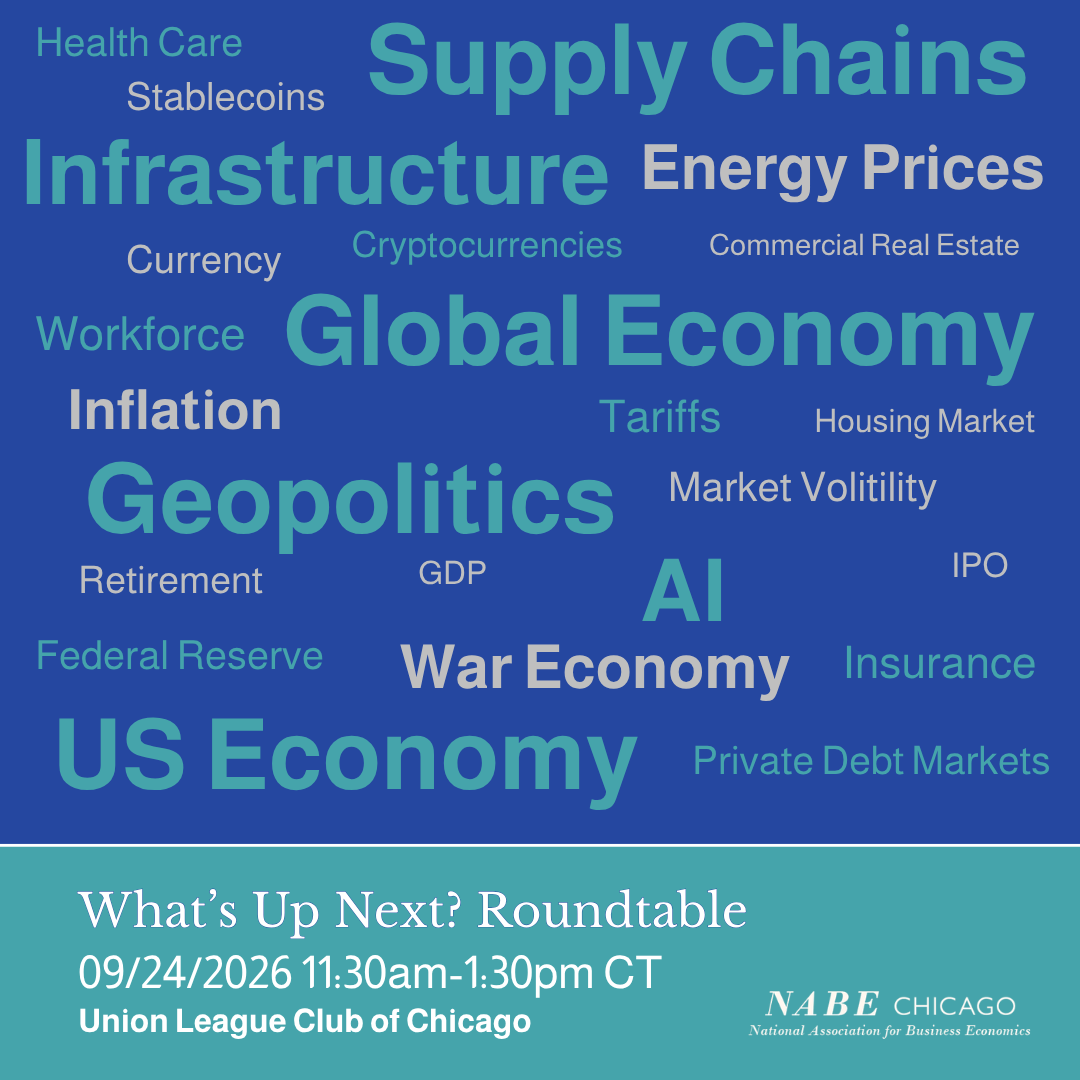
Moderated by Lyric Hughes Hale, NABE CHICAGO BOARD DIRECTOR and Geoeconomics Expert, this quarterly event is a small gathering of econ and business enthusiasts to compare notes on what is occurring now & in the future—
◾WHAT DO CURRENT NEWS HEADLINES MEAN FOR OUR ECONOMIC OUTLOOK:
Trade and Supply Chains
Energy and Inflation
Financial/Commodity Markets
AI Competition
The Changing Architecture of the Global Economy
◾CURRENT NEWS TO CONSIDER:
International leaders’ meetings (or not) implications
Resources (gasoline, energy, computer chips, critical minerals)
Infrastructure Vulnerabilities (water systems, energy grids, telecom networks, transportation)
Security Risks (supply chains, AI, regional wars/conflicts)
A fascinating and full lunch discussion of attendees’ perspectives/information under CHATHAM HOUSE RULE confidentiality. Come share your views, explore others, and enjoy!

CUSHMAN & WAKEFIELD:
Commercial Real Estate as a Strategic Advantage in the Age of AI
September 23, 2026
11:30am – 1:30pm CT
Union League Club of Chicago
The French Room
65 W. Jackson Boulevard, Chicago, IL
Included a 3-course Union League Club lunch.
A a fireside conversation with Brad Kreiger, CO-CEO, Americas and Rebecca Rockey, Head of Quantitative Insights and Principal Economist, at Cushman & Wakefield, under Chatham House confidentiality rule, on how commercial real estate is evolving in an era of continual economic and technological change.
As one of the world's Big 3 commercial real estate services firms, Cushman & Wakefield advises many of the world's largest occupiers, investors, and developers. That vantage point gives Brad and Rebecca an unparalleled view of how organizations are responding to shifting capital markets, workplace transformation, AI-driven demand, and an increasingly unpredictable business environment.
**************************************************************************
Commercial real estate has become far more than a question of space. In today's environment of continual economic disruption, geopolitical uncertainty and accelerating technological change, it has become a strategic lever that influences business performance, capital allocation, talent strategy and long-term resilience.
In this wide-ranging conversation, Brad Kreiger and Rebecca Rockey explored how leading organizations are adapting their real estate strategies to a rapidly changing world. Drawing on Cushman & Wakefield's work with many of the world's largest occupiers, investors and developers, they will discuss:
Why commercial real estate has become an increasingly important boardroom issue, and what executives should be prioritizing today.
How organizations are aligning real estate decisions with financial performance, workforce strategy, and long-term business objectives.
The capital markets trends, economic signals, and risk factors shaping commercial real estate decisions in today's environment.
How AI is already influencing demand across sectors, where its impact is proving most durable, and the leading indicators that business leaders should be watching.
How AI is transforming the advisory profession, enabling faster, more informed decision-making while reinforcing the value of trusted human expertise.
The leadership lessons that have proven most valuable in navigating an increasingly unpredictable business landscape.
The discussion concluded with an audience Q&A, giving attendees the opportunity to explore the issues most relevant to their organizations and industries.
PRODUCTIVITY IN THE AGE OF AI: Does the AI Revolution Make Growth Pessimism Obsolete?
September 14, 2026
4:00pm – 5:00pm CT
The University Club
76 E. Monroe Street, Chicago, IL
After 5pm: optional post-event gathering at Pizano’s Pizza & Pasta .
61 E. Madison Street, Chicago, IL
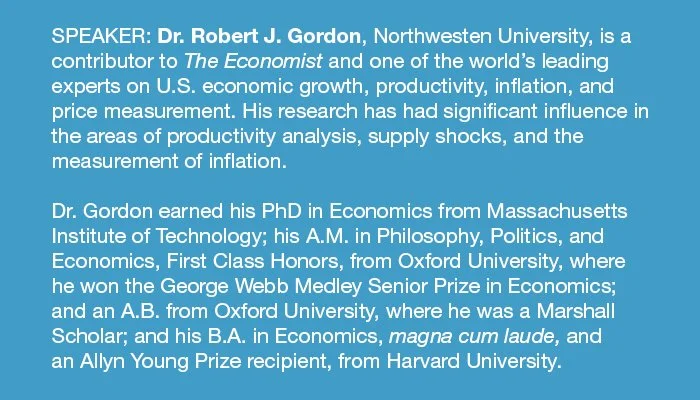
A one-hour Chatham House Rule presentation by Dr. Robert Gordon that offered many insights, plus a highly interactive Q&A session.
The AI revolution is the hottest topic everywhere: among economists, financial analysts, policymakers, and almost everyone else. Most of today’s focus is on the likelihood of a job apocalypse, equity market bubble, and the overbuilding of data centers. This talk took a different approach. Dr. Gordon’s focus was:
Productivity is growing faster since 2022, but why?
A boost to productivity in high-paying industries does not always translate over one-for-one to faster productivity growth for the total economy…so what should we expect AI’s impact to be?
Are there any headwinds in the economy—including “Baumol’s cost disease”—that could slow or derail economic growth?
Will declining fertility and growing longevity overwhelm the economy with exploding deficits and debt?

CRITICAL THINKING & BUSINESS EDUCATION: Gaining Skills/Experience Relevant in the AI Era
North Central College—Naperville's University—is one of the 6% of business schools world-wide who have earned AACSB accreditation, which is the gold standard in business education.
September 10, 2026
3:00 pm – 4:30 pm CT
VIRTUAL EVENT
Dr. Gwendolyn Tedeschi, Professor & Chair, Economics & Finance, North Central College, School of Business & Entrepreneurship, discusses:
What’s actually different with this new AI technology that could be a negative impact if not addressed through focused learning experiences.
How education can ensure that students—of all ages—truly learn vital (no AI cheating) skills and information PLUS gain the necessary approaches to make AI work most effectively in their careers.
“AI is not eliminating the need for human judgment, it is raising the stakes for human judgment.”—Dr. Tedeschi
This Chatham House Rule interactive discussion also featured experts from the business/finance/human capital arenas giving examples that illustrated Dr. Tedeschi’s commentary.
Attendees shared their insights into this important conversation as well so that all left the session better prepared to make the most of their AI Era experience.

Three 1776 Economic Creations 250 Years Later:
1.Capitalism. 2.The American Revolution. 3.ESOP (Employee Stock Ownership Plan) Companies.

July 30, 2026
The Co-op
5751 S. Woodlawn Avenue, Chicago, IL
3:30pm – 5:30pm CT
Adam Smith’s The Wealth of Nations introduced Capitalism in 1776.
Samuel Adams is the recognized driver behind the 13 North American colonies banding together, first with The Boston Tea Party, then with the signing of The Declaration of Independence in 1776 that culminated with The Constitution of the United States of America being crafted in 1787.
Samuel Adams worked closely with George Washington, the USA’s first President, during the Revolutionary War when Washington served as Commander in Chief.
3. Benjamin Franklin was busy, too, founding in 1776 the Employee Stock Ownership Plan (ESOP) that has enabled employees to be stock owners in the company of their employment.
How have these 3 concepts impacted each other—and the USA economy—throughout the past 250 years and all the way to today?
Come listen to:
An ECONOMIC HISTORIAN discussing how capitalism and US democracy have influenced each other.
Mary Josephs, Founder of ESOP advisory firm, Verit Advisors, reviewing the impact of ESOPs on the development of US capitalism and democracy.
NOTE: Books on Adam Smith, Samuel Adams, and George Washington are available for sale online and at the event. Mary Josephs’s article can also be read in advance here.
WHAT’S UP NEXT?
ROUNDTABLE

June 25, 2026
Union League Club of Chicago
The Marble Room
65 W. Jackson Boulevard, Chicago, IL
11:30am – 1:30pm CT
Note: A 3-course lunch was included with ticket.
SOLD OUT EVENT!
Moderated by Lyric Hughes Hale, NABE CHICAGO BOARD DIRECTOR and Geoeconomics Expert, this quarterly event is a small gathering of econ and business enthusiasts to compare notes on what is occurring now & in the future—
Very informative insights emerge, which is why 100% of attendees at the last WHAT’S UP NEXT? ROUNDTABLE gave the interactions they had with the other attendees as greatly perspicacious—the highest rating possible! 🙂
Chatham House confidentiality rule applies to conversations at this event.
There are over 500 different economic topics that can impact businesses.
Our next Quarterly Roundtable is on September 24, 2026. REGISTER NOW, as this event sells out quickly and has limited room!

THE 2026 HOT SECTORS: M&A, IP, AI, & TAX STRATEGIES
May 12, 2026
Location: Union League Club of Chicago
65 W. Jackson Blvd., Chicago, IL
1:00pm – 5:00pm CT
SOLD OUT EVENT!
Three 1-hour long sessions, each beginning with a panel of three experts for 30 minutes, followed by the experts joining in individual roundtable discussions for another 30 minutes. Attendees rotated to different tables for each round AND enjoyed drinks & snacks from the self-serve refreshments table.
ROUNDTABLE 1: STATE OF THE ECONOMY & BUSINESS: M&A, Taxes, Tariffs, Inflation, Interest Rates, Employment, Trade, Economic Incentives, Regulations—how are they affecting your business, your industry, your Intellectual Property value, your future corporate growth?
Expert 1: Thomas Walstrum, Business Economist, FEDERAL RESERVE BANK OF CHICAGO—Latest on Business Economic Forecast/Inflation, plus Wars & Tariffs Impacts
Expert 2: Ping Liang, Chief Economist, NUCOR—the Largest US Steel Maker on Policy Effects
Expert 3: Vlad Starkov, MD, Platinum Sponsor NERA—Rules/Incentives Effects on Tax & IP
ROUNDTABLE 2: BUSINESS & AI—Our Journey Together: Deploying AI: expectations vs deployment; what’s next, AI with human workforce—optimal interactions & concerns, legal topics: transformation of industry, risks and returns.
Expert 1: Khwaja Shaik, CTO, IBM—Boards/Leaders Asking the Right AI Questions
Expert 2: Gwendolyn Tedeschi, Economics Department Chair, NORTH CENTRAL COLLEGE—Critical Thinking & Education Tools to Replace Entry Level Experience Now Done by AI
Expert 3: Oceana Wang, Global Consultant, Platinum Sponsor NERA—Value Creation (What Creates Revenue) Changes to Capture AI Industry/Process/Product Impacts
ROUNDTABLE 3: WHAT SOLUTIONS CAN WE OFFER: Speakers discuss possible solutions to issues raised either in previous roundtables or own/new options to consider.
Expert 1: Eric Welchko, President, Harney Capital—Growth/Sale/Turnaround Options
Expert 2: Negar Sedghi, Cheese (Laughing Cow, Boursin, Baby Bel) GM, BEL BRANDS USA—The Changing Nutrition and GLP-1 Impacts on the Snack Industry
Expert 3: Gary Meyers, Founder, THE MEYERS REPORT—Top 3 Geopolitical Forecasts


“Great 2026 HOT SECTORS event! It was very informative. The speakers on the panels were excellent. Presentations were well thought out and the speakers were clearly proficient in their areas. I'm excited for future events!”
- Lally Doerrer, Managing Director, Kaizen, Inc.
Perspectives From
Bank Economists

Time: 4:00pm - 5:00pm CT
Location: Northern Trust Global Conference
April 9, 2026
After 5pm: optional pay-your-own Happy Hour at Franklin Tap
A NABE CHICAGO in-person event that featured Northern Trust, one of the largest, award-winning, US banking institutions with a global reach. Northern Trust’s Ryan James Boyle, Chief US Economist, and Carl Tannenbaum, CBE, EVP & Chief Economist discussed:
The 2nd Quarter Global & US Economic Outlooks.
The crucial Behind-the-Scenes work that economists perform in and for the financial sector.
Attendees enjoyed a very illuminating and engaging experience and conversation about:
How will shifting policies affect economic prospects?
What new risks are in play, and what old risks linger?
How is the financial sector working through these risks and novel developments?
Northern Trust is also the largest bank in Chicago, and a leading global custody and wealth management institution, founded in 1889. Northern Trust was recently named “Best Private Bank in US” and “Best Private Bank in North America for Entrepreneurs” by Financial Times Group.

Above is a photo with our Student Members (from left to right):
Mason Hess, Atiyeh Hasanian, Kathleen Graham (NABE CHICAGO President) with her dog Brylee, Abdallah Dalis, Logan Hess, and Gwendolyn Tedeschi (NABE CHICAGO Board Director).

…and, to the right is a group photo of some of the attendees, the ones who stayed afterwards for further conversation.
MONEY BEYOND BORDERS - Part 2:
Threats to the US Dollar

April 1, 2026
Location: Virtual via Zoom
3:00pm – 4:00pm CT
A NABE CHICAGO virtual event with Professor Barry Eichengreen for Part 2 of assessing threats to the US dollar. His new book MONEY BEYOND BORDERS: GLOBAL CURRENCIES FROM CROESUS TO CRYPTO debuted March 17, 2026. Dr. Eichengreen and our moderator, NABE CHICAGO Board Director, Dr. Karim Pakravan, discussed it with NABE CHICAGO on April 1st.
Dr. Eichengreen answered/discussed:
Is the US dollar now on the downside of the life cycle of global currencies?
Who will be the winners and losers if there is a flight away from the greenback?
Will the advent of today’s cryptocurrencies change the historical patterns?
What about central bank digital currencies of tomorrow—what are their possible impacts on the lifecycle of the US dollar?
ALSO: Attendees received a discount code for the purchase of his new book, AND and opportunity to view/review Money Beyond Borders - Part 1 video.
“All such historic global currencies, Eichengreen shows, dominated the monetary scene…but all were ultimately superseded. ‘International currency status is not forever,’ Eichengreen writes. It is ‘akin to an endowment of natural resource wealth. It can be managed well, in which case it is an asset for current and future generations, or it can be managed poorly, in which case it becomes a curse.”—Financial Times book review
WHAT’S UP NEXT?
ROUNDTABLE

March 26, 2026
Location: Union League Club of Chicago
65 W. Jackson Boulevard, Chicago, IL
11:30am – 1:30pm CT
SOLD OUT EVENT!
Moderated by Lyric Hughes Hale, NABE CHICAGO BOARD DIRECTOR and Geoeconomics Expert, this quarterly event is a small gathering of business and econ enthusiasts to compare and catch up on what is occurring now and in the future through the lens of each attendee’s specialty perspectives….right at the end of each quarter.
There are over 500 different economic topics that can impact businesses. Come share your views, explore others, and enjoy!
Chatham House confidentiality rule applies to conversations at these events.
Other Dates for 2026 will be: June 25, 2026 and September 24, 2026.
INTERNAL STRUCTURAL THREATS TO THE US DOLLAR
A virtual discussion with Barry Eichengreen, PhD, University of CA Berkeley Economics Chair

February 11, 2026
Location: Virtual via Zoom
3:30pm – 4:30pm CT
STILL KNOCKING IT OUT OF THE PARK—5.7/6.0 Attendee Event Rating!
A NABE CHICAGO virtual event under Chatham House Rule with NABE CHICAGO member Karim Pakravan leading the discussion with Professor Eichengreen focused on understanding the internal threats to the US dollar’s preeminent role in the global economy: its roots, manifestation, followed by a discussion of the current/potential impacts on the United States/global economy.
Areas discussed—along with attendees’ areas of interests and questions—included:
Policy changes: what are the potential implications on the US dollar from protectionism? government regulations?
Isolationism: involvement level with multilateral economic institutions vs own domestic interests; potential conflicts?
Other policies: monetary policies (price stability, inflation level, full employment, stable economic growth) & fiscal policies (government debt, deficits, foreign financing of a deficit, stablecoins).

THE ART OF ECONOMIC FORECASTING
February 4, 2026
Location: Union League Club
65 W. Jackson Blvd., Chicago, IL
11:30am – 1:30pm CT
SOLD OUT EVENT!
5.9/6.0 Attendee Event Rating!
ATTENDEE SURVEY RESULTS IN: another 5.9/6 rating with 100% mentioning the quality of the people they met and the conversations at their as 6/6!...with 6/6 for food & beverage & venue also 6/6!
Mike Lewis received the the NABE CHICAGO LIFETIME ACHIEVEMENT AWARD. Annually since 1986, Mike Lewis has hosted 10-15 economists in a private meeting where they tested their forecasting accuracy by each giving a “no holds barred, swing for the fences,” economic forecast for the following year.
Highlights were shared on “The Art of Economic Forecasting,” including what tips professionals, like attendees of Lewis’ yearly event, have found to be most helpful in generating accurate economic forecasts.
THE 2026 FORECASTING CONTEST. Guests were invited to confidentially submit their own 2026 economic forecast to contend for the chance to be the NABE CHICAGO 2026 Forecast winner. Five categories cover equity markets, monetary policy, interest rates, and the overall economy (unemployment).
Attendees at this event registered their “swing for the fences” 2026 Economic Forecasts. Stay tuned.
Save the Date: January 20, 2027 at the Union League Club.
Here are the remarks by Mike Lewis upon receiving the NABE CHICAGO Lifetime Achievement Award.
Not long after I entered MIT in the early 70s, a fellow fraternity member, Sam, called me the luckiest person he knew. He was referring to my draft number, a very high 297 (his number was 11). I did not go to Vietnam, which was lucky for me. Sam went, made it back, and was my best friend for nearly 50 years. Luckier still for me.
My lucky streak continued over the years, building a family. My beautiful daughters Lisa and Lindsey, their husbands Kyle and Ron, and two grandchildren. Later in life, I found my soulmate Yelena—we met here at the Union League Club. Through her, I found another extended family and another two grandchildren, several of whom have joined us today. It’s a good life to be sure.
I also had the great luck to be able to do a job I love for five decades. After graduation, I spent a few years in the corporate world. Then, I risked it all to hang my own shingle as an economic consultant. It was a modest beginning. My first office was in a dilapidated 19th-century high-rise down the block from here. Smaller than this stage, only one bathroom nine floors away. That soon led to better things—first a better office. Incidentally, that first building itself is now very fashionable Printer’s Row apartments. Presumably with more bathrooms.
Most of all, my company, Free Market, Inc., boasts a forecasting track record, especially in the past five years, that I think is about the very best out there. We focus on the fundamentals and reject both “crisis” hysteria and baseless wishful thinking, and “transitory” hopes.
One of the by-products of my company is the annual forecasting contest, which we have been running for almost 40 years, and which we will hear more about shortly. The contest started as a marketing opportunity. And a tax deduction. It became a community, where industry veterans could meet up-and-comers, to exchange information and viewpoints. And of course, the contest comes with bragging rights.
As I finish up, I would like to thank NABE CHICAGO for this recognition. I accept it for myself, for the many capable and extraordinary people I have worked with over the years, and also for the important role played by INDEPENDENT economists in today’s financial industry. The industry has changed dramatically in the past decade. Regulatory restrictions on the use of soft dollars have been a major blow to basic research. The extended bull market has led many to question the value of managed investments. This, too, will pass, to coin a prediction. There will always be a NEED for independent economic analysis. If we are all lucky, there will be opportunity for it.
My thanks to you all, to my family, and to NABE CHICAGO!


HOLIDAY PARTY POP-UP

December 19, 2025
12:00pm-1:30pm CT
Location: Chicago Federal Reserve Money Museum
230 S. LaSalle St., Chicago, IL
Our attendees gave their HIGHEST RATING (overall, Thom’s presentation, & venue) of our 12/19 Money Museum Holiday Party with Federal Reserve Bank of Chicago’s Principal Business Economist Thomas Walstrum discussing Chicagoland’s macro and regional outlook. Pictures are from the Union League Club where the majority of attendees (including service dog Brylee) gathered to further discuss some very interesting takeaways. Thank you, Thomas Walstrum and Federal Reserve Bank of Chicago’s Money Museum for making this event so informative & fun!

“A great way to wrap up 2025- attending NABE CHICAGO's Holiday Party at the Chicago Fed's Money Museum on December 19. From an insightful discussion on Chicago's macro and regional economic outlook by Thomas Walstrum to engaging conversations with NABE community, this event highlighted the importance of connecting economic analysis with real-world policy and business insights. Thankful for the opportunities like this to learn, exchange ideas, and end the year with meaningful insights and conversations!” – Atiyeh Hasanin (Economics PhD Student)
POP-UP ROUND TABLE: 9/17 FEDERAL RESERVE DECISION – WHAT DO YOU THINK?

September 17, 2025
5:00pm-7:00pm CT
Location: The Metropolitan Club
Was it a surprise… and why? Will it work or won’t it? Inquiring minds share and grow, and want to know what others think the likely outcome will be from September 17th’s big decision.
NABE CHICAGO Board Director Lyric Hughes Hale, host of The Hale Report, moderated the discussion that started with Substack’s highly rated publication/forum called econVue’s Jackson Hole panel.
Guests listened to the Jackson Hole panel recording, then celebrated OR mourned. Whatever the results of the Fed decision, there will be plenty to talk about while enjoying a variety of appetizers with a cash bar.
“That was a great meeting, Kathleen. Thank you so much…and looking forward to many more to come!” – Lyric Hughes Hale
NABE 67th ANNUAL Meeting

Marriot Philadelphia Downtown
October 12-14, 2025
Jerome Powell, Federal Reserve Chairman as Lunch Keynote
Alternative Data Sources, Rising Electricity Demand Experts
Climate, Insurance & AI Impacts dissected by top Scholars
NOTE:
NABE CHICAGO membership is not necessary to attend NABE CHICAGO events.
NABE CHICAGO membership does provide you with savings on attending events.
NABE CHICAGO membership can be paid by credit card or debit card with a surcharge added to the membership cost.
NABE CHICAGO membership can be paid by Zelle or ACH with no additional cost.
NABE CHICAGO membership can be paid by an individual or the individual’s company (with a surcharge added to membership cost IF paid by credit card).